Module 12
AI Research & Analysis
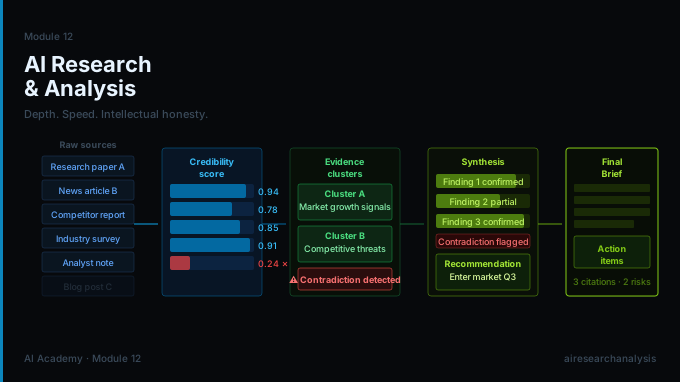
10× the depth and speed of any research process
Lessons
PremiumStart the 7-day trial to open this module.
You can still review the module outcomes, capstone, examples, and resources before upgrading.
12.1
Deep Research Architecture
Locked60 min
12.2
Scientific Literature with AI
Locked75 min
12.3
Competitive Intelligence Systems
Locked60 min
12.4
Data Analysis with Natural Language
Locked55 min
Expert Lens
Founder
Think like a founder: what user pain, distribution channel, pricing, and retention loop does this AI capability unlock?
Systems
Think like a first-principles systems builder: separate demos from durable products, and measure the bottleneck the model actually removes.
Infrastructure
Think like an AI infrastructure leader: account for data, latency, cost, reliability, evaluation, and deployment constraints before scaling.
Objectives
- Conduct deep AI-assisted research at expert level
- Build systematic literature review pipelines
- Create competitive intelligence systems
- Analyze complex data with natural language
Capstone
Autonomous Research Engine
Build an AI system that monitors a domain, synthesizes developments, and delivers weekly intelligence briefings automatically.
A live research intelligence system producing real weekly output.
Real Examples
- A solo operator replaces repetitive research, drafting, and QA loops with an AI-assisted workflow while preserving human review.
- A startup validates an AI feature by measuring time saved, accuracy, user retention, and willingness to pay before building a platform.
- An enterprise team moves from chatbot demo to governed internal assistant with retrieval, permissions, observability, and escalation.
Mastery Checks
- Produce a cited research memo with source quality notes.
- Separate confirmed facts, assumptions, competing interpretations, and open questions.
- Use AI for synthesis while preserving human responsibility for the conclusion.